ACCURL & DURMA Distributor · Established 1970
CNC Press brake Machines
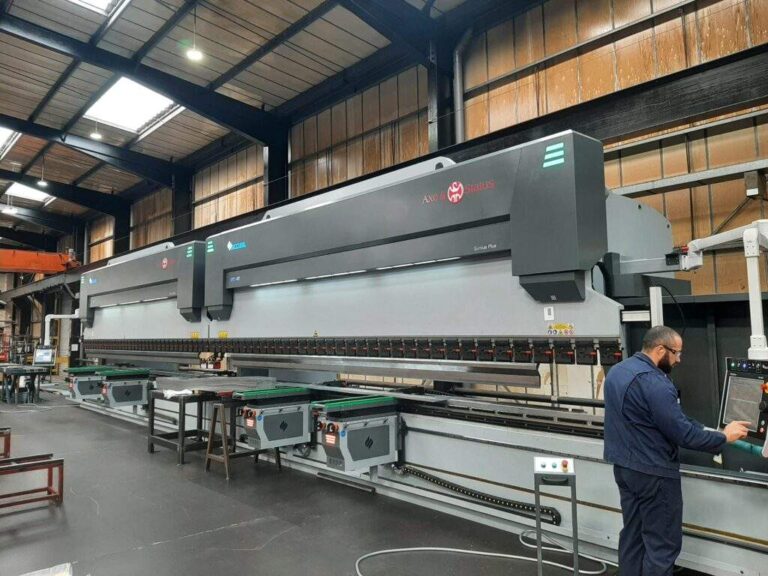
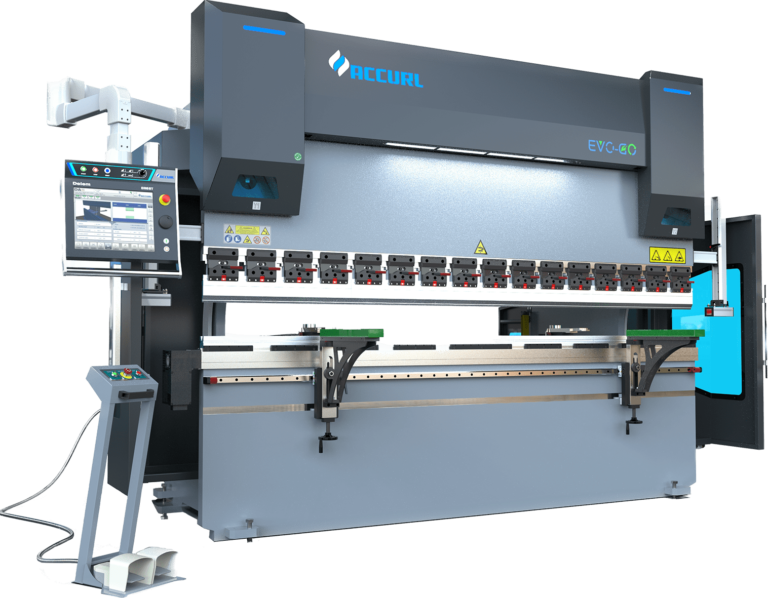
Discover our range of high-performance ACCURL CNC press brake machines, designed for accurate, efficient and reliable sheet metal bending across a wide range of manufacturing applications.
- Established 1970
- ACCURL & DURMA press brake
- In-house engineering, installation & training
Introduction
Press brake Standard Choice for Precision Bending
Press brake bends sheet and plate to exact angles by clamping the material between a punch and a matching die. Computer control sets the depth, angle and back gauge automatically, so the same part comes out right on the first piece and every one after it.
We supply the full ACCURL and DURMA press brake range, from entry-level Genius Pro machines through to double-servo EuroMaster and robotic tandem systems. Every machine is backed by in-house applications engineering, installation, operator training and ongoing service.
A CNC Press brake utilises hydraulic or electric force. Conventional press brake require more expertise and skill, and more operators to do the work. With CNC press brake, you benefit from the same quality while reducing labour requirements and improving productivity.

At a glance
CNC Press brake bending at a glance
Materials
- Mild steel: Every tonnage rating is quoted against it, typically 450 N/mm². Predictable springback, standard tooling.
- Stainless steel: Needs around 1.5 times the tonnage of mild steel and springs back further. Polished tooling avoids galling marks.
- Aluminium: Roughly half the tonnage, but cracks on tight radii. Bend across the grain and allow a generous inside radius.
- Brass and copper: Very low force required, but they mark easily. Protective film or polished tooling on visible parts.
Tonnage
- Entry level through to high tonnage tandem systems.
- Force depends on four things: material thickness, bend length, tensile strength and V die opening.
- Air bending usually runs a V die opening of around eight times material thickness.
- Bottoming needs more force than air bending; coining needs several times more again.
- Tandem systems pair two machines under one control, running long parts together or short parts independently.
Controls
Delem and Sky CNC, configurable up to 10 axes.
- Delem: European standard, with graphical programming and automatic bend sequencing. Most experienced operators already know it.
- Sky CNC: Similar core functions at lower cost, suited to a stable range of parts.
- Y1 and Y2: Control each end of the beam independently, keeping the angle consistent along the bend.
- X and R: Set flange length and back gauge height, so the gauge clears existing flanges.
- Z1 and Z2: Move the gauge fingers laterally to support asymmetric and tapered parts.
- Crowning: Compensates for bed and beam deflection across long bends.
Support
- Installation: Commissioned by our own engineers, covering levelling, calibration and a first article check on your material.
- Operator training: Delivered on your machine with your parts. Most operators are productive within a day.
- Service: UK-based engineers, with retraining available if your team changes.
The range
Our ACCURL Press brake Range
If you’re looking to invest in a high-quality press brake machine, we invite you to explore our full range. With various designs and specifications available. You can find the right machine to match your exact production requirements.
Whether you’re upgrading your existing workshop or setting up a new facility, CNC press brake machines offer significant advantages, from boosting productivity and improving precision to reducing operational costs.
Selecting the right machine can significantly enhance your manufacturing process, helping you achieve greater efficiency and consistency. Four machine families covering everything from thin sheet to thick plate and 12-metre tube. Choose a machine to see full specification.

Entry level
ACCURL Genius Pro
A precise, dependable first CNC press brake for shops moving into computer-controlled bending.

6 to 8 axis
ACCURL Genius Plus & Tandem

Servo-electric
ACCURL eB ICON

Top level
ACCURL EuroMaster Double Servo

Hydraulic
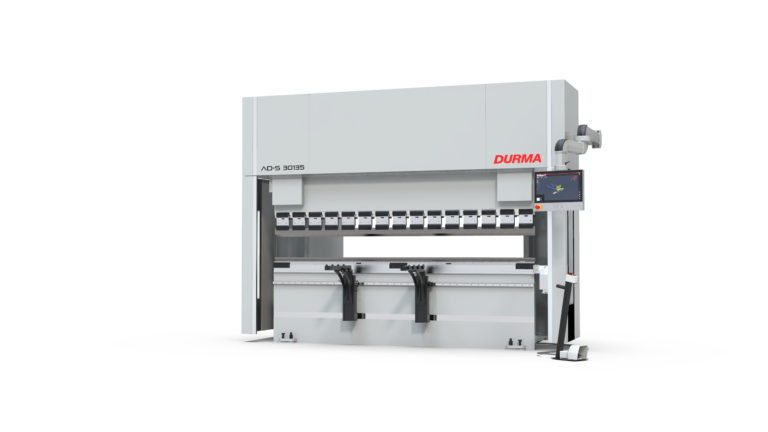
DURMA AD-S Series
Proven, heavy-duty hydraulic press brake for reliable everyday production.
Hybrid servo
DURMA AD-Servo

Automation
ACCURL Robotic Cells

Controls
Delem & Sky Controls
How it works
How CNC Press brake bending works
A press brake forms metal by driving a punch down onto sheet held over a die. CNC control sets the punch depth, which sets the bend angle, while the back gauge positions the sheet for each bend in the sequence.
Because the machine holds those positions to a fraction of a millimetre, complex multi-bend parts repeat exactly from the first piece to the last. That precision is why CNC machines have replaced conventional press brake across most of the industry.
Servo vs hydraulic in brief
Hydraulic press brake deliver high force and are the proven choice for heavy plate. Servo-electric machines use less energy, run quieter and faster, and hold angle accuracy exceptionally well. Hybrid machines pair hydraulic power with servo control.
Bend methods
Air bending
Bottoming
Coining
Key features
Key Features of Our Press brake
Precise, repeatable bends
Accurate bend angles and dimensions on the first part and every part after it, ideal for complex components and volume production alike.
Fast setup, low running costs.
Simple programmable operation and a durable, low-maintenance design that keeps setup times short and energy use low.
Remote diagnostics & support
Remote diagnostics and UK-based engineers keep your machine productive and downtime low.
Types
Types of Press brake we Supply
Hydraulic press brake Proven, heavy-duty bending force for thick plate and dependable everyday production. Our DURMA AD-S Series.
Servo-electric press brake Faster, quieter and more energy-efficient, with excellent angle accuracy and repeatability. Our ACCURL eB ICON.
Hybrid press brake Hydraulic power paired with servo control and efficiency, giving strong force with lower running costs. Our DURMA AD-Servo.
Tandem press brake Two machines under one control, running long or heavy parts together and short parts independently. Our ACCURL Genius Plus and Tandem.
Robotic press brake cells Robot-tended bending for high-volume, lights-out production with consistent results across long runs. Our ACCURL Robotic Cells.
Performance
Press Brake Machines Performance
Materials & thicknesses
Materials and thicknesses
| Material | Typical use | Indicative capacity |
|---|---|---|
| Mild steel | General fabrication | Thin sheet to thick plate, machine dependent |
| Stainless steel | Food, medical, architectural | Clean bends, allow for higher springback |
| Aluminium | Transport, enclosures | Softer alloys, mind tight inside radii |
| Brass / copper | Decorative, electrical | Soft, protect finish with careful tooling |
Final capacity confirmed against the chosen machine's tonnage and tooling.
Why Axe & Status
The machine is only half the decision
Applications engineering
We assess your parts and process before you buy
Installation & commissioning
Delivered, sited and running by our own team
Operator training
Your people confident on the machine from day one
Service & breakdown cover
UK-based engineers and stocked parts
Direct WhatsApp support
A straight line to your engineers when it matters

Customer case study
Kellys Welding
≈8×
faster than their previous CO2 laser
↓↓
major monthly energy savings
Kellys Welding replaced an ageing CO2 laser with an ACCURL MasterLINE 6kW and reported cutting around eight times faster, alongside a substantial drop in monthly energy costs.
Why Axe & Status
FAQs
What is a press brake?
A press brake is a machine used to bend sheet metal into precise angles and shapes. It applies force with a punch and die to form metal parts.
What is the rule of 8 on a press brake?
What are the two main types of press brake?
The two main types are mechanical press brake and hydraulic press brake. Mechanical models are fast, while hydraulic ones offer greater bending force and flexibility.
Is a servo-electric press brake better than hydraulic?
What is the purpose of a press brake?
What are the three types of bending?
Which bending is strongest?
Coining produces the strongest bend as the material is fully pressed into the die, creating a highly accurate and durable bend.
How much does a CNC press brake cost in the UK?
What is the 2nd and 3rd form of bend?
- 2nd form: Bottoming, where the punch presses the sheet into the die partially.
- 3rd form: Coining, where the sheet is fully compressed into the die for precision.
What is the K factor of bending?
What tonnage and bed length do I need?
Do you provide installation and operator training?
Related reading