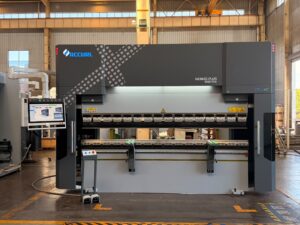
A press brake is one of the most important machines in any metal fabrication workshop. It’s the tool that turns flat sheet metal into the folded, angled and formed parts used in everything from enclosures and brackets to structural components.
If you’re new to press brakes, or thinking about investing in one, it helps to get to grips with the basics: the types available, the range of sizes, and the materials they can handle.
This guide covers all three, clearly and simply.
What is a press brake?
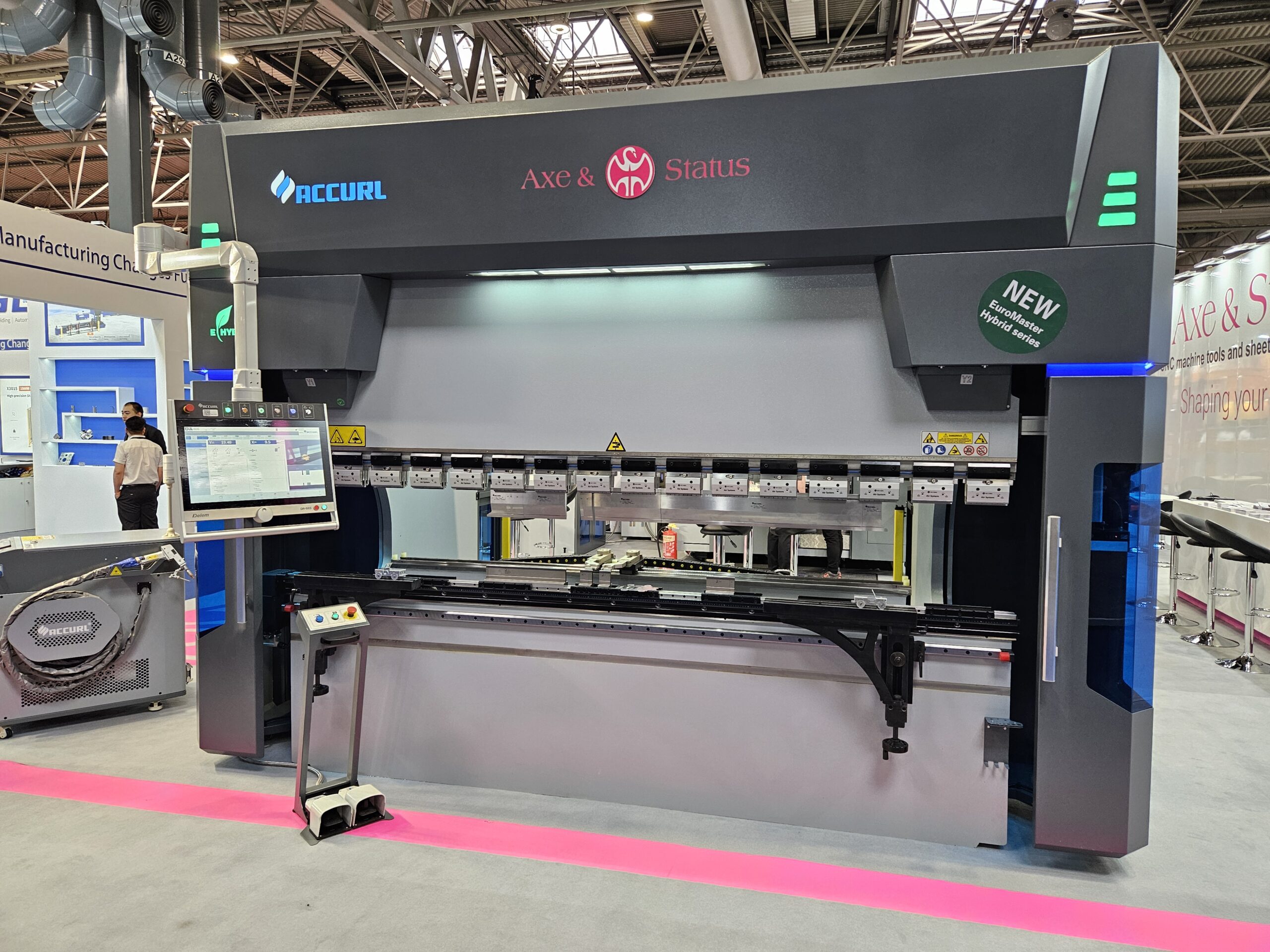
A press brake is a machine that bends sheet and plate metal into a set shape. It works by clamping the metal between two pieces of tooling, an upper punch and a lower die, then pressing them together so the metal folds to a precise angle. By repeating and combining bends, fabricators can create a huge range of shapes and components, accurately and consistently.
Most modern press brakes are controlled by CNC, so bends are programmed and carried out automatically for excellent precision and repeatability. Simpler manual machines are still used for more basic work.
Types of press brakes
Press brakes are usually grouped by how they generate their bending force. The main types are these.
Hydraulic press brakes are the most common. They use hydraulic cylinders to drive the ram and apply force, which makes them powerful, versatile and well suited to a broad range of materials and thicknesses. They give precise, reliable control across everything from light work to heavy duty bending.
Servo electric press brakes use electric servo motors instead of hydraulics to move the ram. They’re fast, highly accurate and energy efficient, and tend to be the choice for lighter, quicker work.
Hybrid press brakes bring hydraulic power and servo electric control together, aiming to offer the best of both: the strength of hydraulics alongside the speed, precision and efficiency of electric drive.
Mechanical press brakes use a flywheel and clutch to generate force. It’s an older design, quick but less flexible than modern machines, and much rarer these days.
Pneumatic press brakes run on compressed air and are generally suited to lighter bending of thinner materials.
For most fabricators, the real decision comes down to hydraulic, electric or hybrid. The right one depends on your materials, your volumes and what matters most to you, which we compare in detail in our separate guide to hydraulic, electric and hybrid press brakes.
Press brake sizes
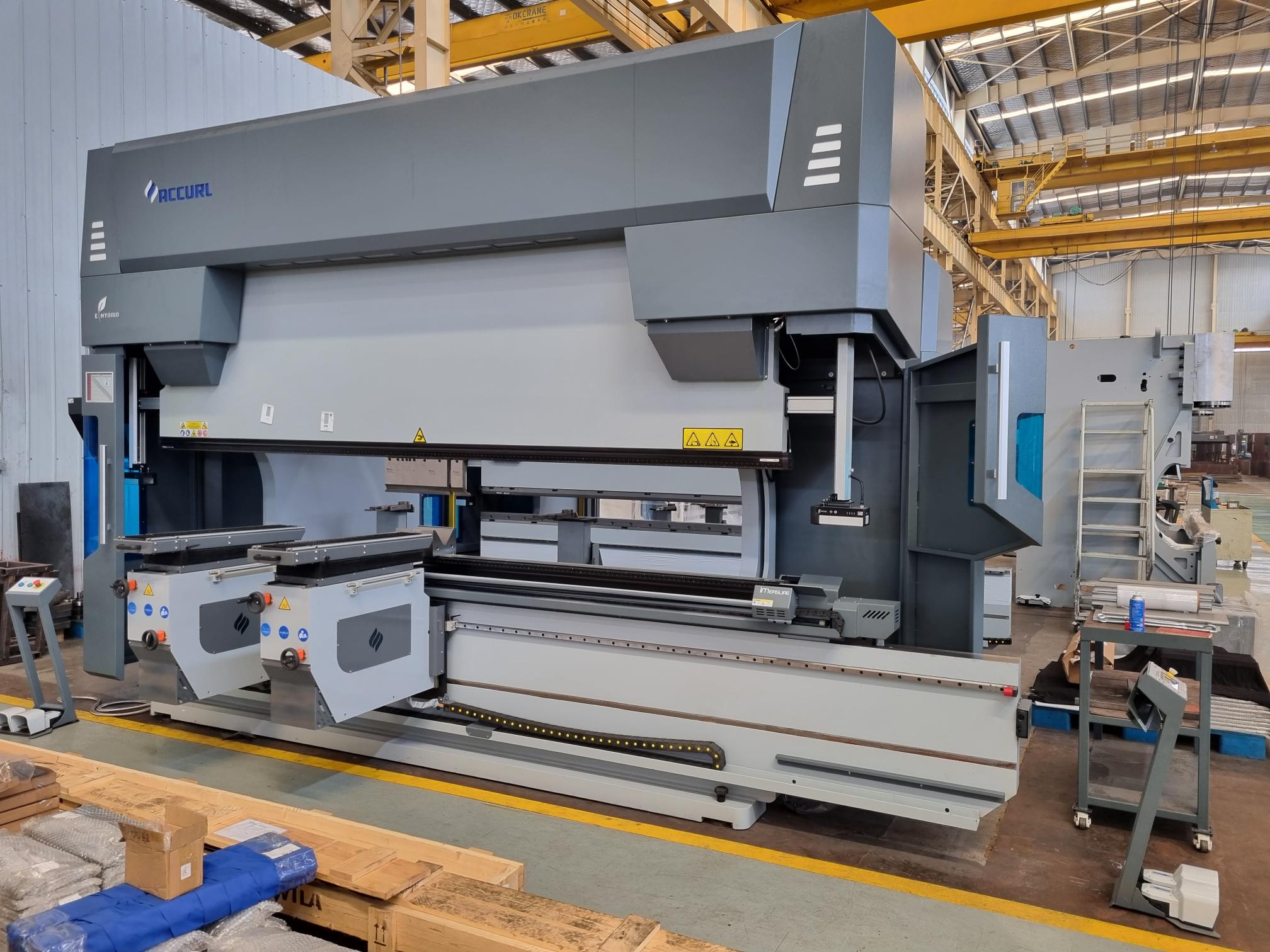
Press brakes come in a wide range of sizes, defined mainly by two figures: bending length and bending force, or tonnage.
Bending length is the longest piece of material the machine can bend. It usually ranges from around 1,250mm on compact machines to 6,000mm or more on larger ones, and where you need extra length, two machines can sometimes be run in tandem.
Bending force, measured in tonnes, sets how thick and how strong a material the machine can bend. This tends to run from around 30 to 40 tonnes on smaller machines up to 400 tonnes on heavy duty models, and as much as 800 tonnes or more for specialised machines.
Other dimensions matter too, including the throat depth, which is how far material can reach into the machine, and the daylight and stroke, which describe the working height and how far the ram travels. Together, they shape the size and form of the parts you can make.
Getting the size right is really about matching the machine to your work: the longest and thickest parts you need to bend, and how much you produce. Longer, thicker and stronger materials call for more tonnage, and working out exactly how much is a subject in its own right, which we cover in our guide to calculating press brake tonnage.
Materials a press brake can bend
Press brakes are used to form a wide range of metals. The most common are these.
Mild (carbon) steel is the most widely bent material, and the benchmark that bending force is usually measured against.
Stainless steel is stronger and harder than mild steel, so it needs roughly 50% more force to bend the same thickness.
Aluminium is softer and more workable, so it needs considerably less force, though it can be prone to cracking if it isn’t handled properly.
Copper and brass are also commonly formed, each with their own qualities.
The key thing to remember is that the material makes a real difference to what a machine can handle. A press brake’s thickness capacity depends not just on its tonnage but on the metal being bent, so the same machine will bend thinner stainless steel than mild steel, and thicker aluminium. Material, thickness and bend length all need to be weighed up together when matching a machine to the job.
Press brake tooling
Press brake tooling consists of upper punches and lower V-dies that use high pressure to bend sheet metal. Choosing the correct punch height, V-die opening size and tool style prevents part warping and controls the inside bend radius, so the tooling matters as much as the machine itself.
Core components and types
Tooling comes in sets, and a few components and profiles cover most work.
The punch, or top tool, mounts to the ram and does the forming. Shapes include standard, acute, narrow and gooseneck profiles.
The die, or bottom tool, mounts to the worktable and features a V-opening that supports the metal as it is bent.
Gooseneck punches are shaped to clear previously formed up-legs and deep U-channels, so you can add bends to a part that has already been folded.
Sectionalised, or segmented, tooling uses short tool pieces that can be arranged along the bed to suit the job, which is what makes box bending possible.
Selection and design rules
Matching tooling to the material and the machine comes down to three things.
The rule of 8 is the usual starting point: the V-die opening width should generally be eight times the thickness of the sheet metal (8 × t). Thicker materials or tighter radii may require wider openings.
Material factors change the result too. Higher tensile strength increases springback, so you may need to adjust the tooling angle or move to a wider groove to reach the same finished angle.
Tonnage limits have to be respected. Exceeding the maximum tonnage rating per foot for a tool can crack or deform the punch and die.
Choosing the right press brake
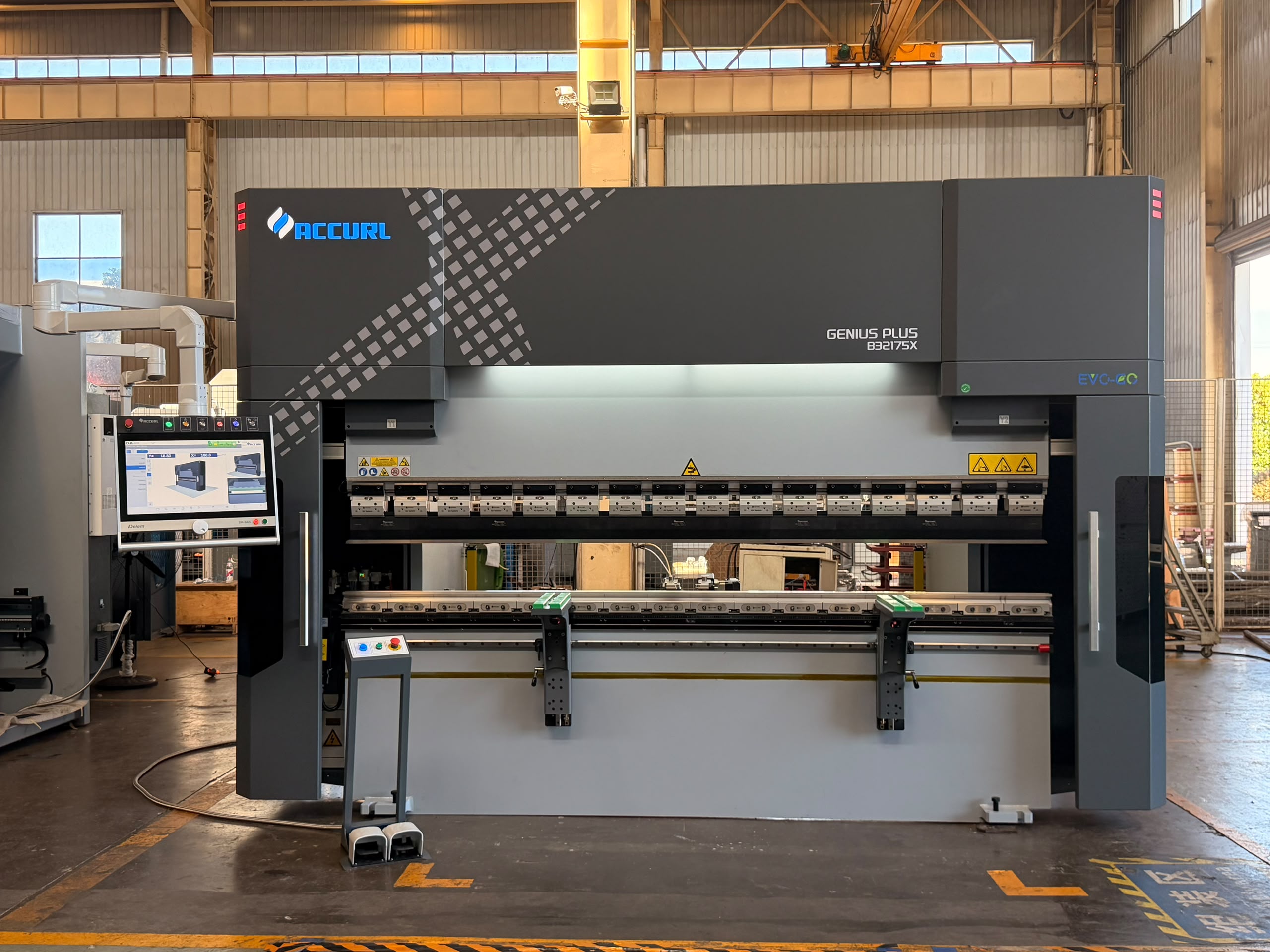
Choosing a press brake really comes down to matching three things to your work: the type, whether hydraulic, electric or hybrid, that suits your priorities; the size, in bending length and tonnage, that covers your largest and thickest parts; and the materials you’ll be forming day to day. Get those right and you’ll have a machine that works hard for you for years, without paying for capability you’ll never use.
For most businesses, the best move is simply to talk it through with a specialist who can match a machine to exactly what you need.
How Axe & Status can help
At Axe & Status, we’ve supplied and supported CNC press brakes for UK fabricators for decades from our base in Milton Keynes, with a range of leading machines backed by expert installation, servicing and technical advice. Whether you’re buying your first press brake or adding capacity, our team will help you find the right type, size and specification for your business. Get in touch to talk through what you need, or browse our latest news and guides for more on press brakes and the rest of our machine range.