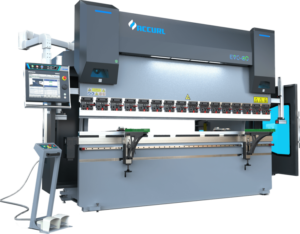
Choosing a press brake is a significant investment, and one of the first decisions is which type of drive system to go for. Hydraulic, electric and hybrid press brakes all bend metal to a precise angle, but they do it in different ways, with real differences in power, speed, running costs and precision. Picking the right one comes down to matching the machine to the work you actually do.
Here’s how the three types compare, and how to decide which suits your business.
The three types of press brake
Press brakes are usually grouped by how they generate their bending force. Hydraulic machines use hydraulic cylinders, electric machines use servo motors, and hybrid machines combine the two. Each approach has its strengths, and none is simply “better” than the others; the right choice depends on your materials, volumes and priorities.
Hydraulic press brakes
Hydraulic press brakes are the traditional and most common type. They use hydraulic cylinders, driven by pumped oil, to move the ram and apply the bending force.
Their great strength is power. Hydraulic machines handle high tonnages and thick, heavy materials with ease, which makes them the go-to choice for heavy-duty fabrication. They are robust, proven and versatile, and they generally cost less to buy than an equivalent electric machine.
The trade-offs are running costs and upkeep. Hydraulic systems use more energy, generate heat and noise, and require regular oil maintenance, including changes and the occasional attention to seals and leaks. For heavy work, though, they remain a dependable workhorse.
Best for: heavy-duty bending, thick materials, high-tonnage work, and buyers prioritising power and value.
Electric (servo-electric) press brakes
Electric press brakes, often called servo-electric, replace hydraulics with electric servo motors that drive the ram through mechanical means such as ball screws or belts.
Their advantages are speed, precision and efficiency. Because the motor only draws power when the ram is moving, electric machines are highly energy efficient, often using considerably less power than a hydraulic equivalent. They are fast, exceptionally accurate and repeatable, quiet, and clean, with no oil to manage. Running costs and maintenance are lower as a result.
The main limitation is tonnage. Electric machines are typically better suited to thinner, lighter materials and generally offer lower maximum tonnage than hydraulic machines, although higher-tonnage electric models are increasingly available. They also tend to cost more to buy.
Best for: thin and light materials, high-volume precision work, fast cycle times, and businesses prioritising energy efficiency and a clean, quiet workshop.
Hybrid press brakes
Hybrid press brakes aim to combine the best of both worlds. They use servo motors to drive a hydraulic pump on demand, so you get the force of a hydraulic system with much of the efficiency and precision of an electric one.
Because the pump only runs when needed, hybrid machines are far more energy efficient than traditional hydraulics, use less oil, generate less heat and run more quietly, while still delivering the high tonnage hydraulic power provides. They are precise and increasingly popular as a modern, cost-effective option, particularly for businesses that want high force without the running costs of a conventional hydraulic machine.
The main consideration is that hybrids typically cost more to buy than a traditional hydraulic machine, though lower running costs often offset this over time.
Best for: businesses wanting high tonnage combined with energy efficiency, precision and lower running costs, and those with an eye on sustainability.
Hydraulic vs electric vs hybrid: at a glance
| Factor | Hydraulic | Electric | Hybrid |
| Drive | Hydraulic cylinders | Servo motors | Servo-driven hydraulic pump |
| Tonnage | High | Lower to moderate | High |
| Speed | Moderate | Fast | Fast |
| Precision | Good | Excellent | Excellent |
| Energy efficiency | Lower | Highest | High |
| Running costs | Higher | Lowest | Low |
| Maintenance | More (oil) | Least | Low |
| Purchase cost | Lowest | Higher | Higher |
| Best suited to | Heavy, thick work | Thin, high-volume precision | High force with efficiency |
Which press brake should you choose?
The right choice comes down to your work and your priorities.
If you regularly bend thick or heavy materials and need high tonnage, a hydraulic machine offers proven power at a competitive purchase price, and a hybrid gives you that same force with lower running costs. If your work is mostly thinner material in higher volumes, and speed, precision and energy efficiency matter most, an electric machine is hard to beat. And if you want high tonnage but are conscious of energy use and running costs, a hybrid increasingly makes the most sense, which is why so many modern fabricators are choosing them.
It is also worth thinking beyond the purchase price. A cheaper hydraulic machine may cost more to run over its life than a more efficient electric or hybrid, so the total cost of ownership is often a better guide than the headline figure. The best approach is to weigh your typical materials, volumes and budget together, ideally with advice from a specialist who can match a machine to your needs.
Choosing your press brake with Axe & Status
There is no single best type of press brake, only the best one for your business. Understanding how hydraulic, electric and hybrid machines differ is the key to investing wisely and getting a machine that earns its keep for years.
At Axe & Status, we supply and support a range of CNC press brakes for UK fabricators from our base in Milton Keynes, and we are always happy to help you choose the right type, size and specification for your work. For a broader overview, see our guide to press brake types, sizes and materials, or get in touch to talk through your requirements.