Fibre laser cutting has become the backbone of modern metal fabrication, and a large part of its appeal is versatility. A single machine can move from thin decorative sheet to structural plate, and from everyday mild steel to reflective metals that older technologies handled poorly. For any business investing in a laser cutting machine, the practical question is simple: what can it actually cut, and how well?
This guide walks through the metals a fibre laser processes efficiently, the materials it is not suited to, and the factors that determine cut quality and thickness capacity. The aim is to help you match a machine to your real production rather than to a specification sheet in isolation.
How Does a Fibre Laser Cut Metal
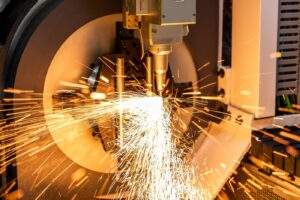
A fibre laser creates its beam inside an optical fibre doped with ytterbium, producing light at a wavelength of around 1.06 microns. That beam is delivered to the cutting head through a fibre-optic cable and focused to a very fine, intense spot. Where it meets the material, it heats the metal to the melting or vaporising point almost instantly, and a jet of assist gas blows the molten material out of the cut to leave a clean edge.
The whole process is directed by CNC control, which moves the head along the programmed path with high precision and repeatability. The assist gas is a key part of the result. Oxygen supports an exothermic reaction that helps cut thicker mild steel at speed, though it leaves an oxidised edge. Nitrogen is inert and produces clean, oxide-free edges on stainless steel and aluminium, at higher gas pressures and cost. Compressed air offers an economical option for thinner material where a light oxide layer is acceptable. Choosing the right gas for the metal and finish required is central to good fibre laser cutting.
Why Fibre Lasers Are Ideal for Metal Cutting
Several characteristics make fibre the technology of choice for metal work:
- High precision: a fine focused spot supports tight tolerances and intricate detail.
- Fast cutting speeds: especially on thin and mid-gauge sheet, where fibre outpaces older systems by a wide margin.
- Low operating costs: strong energy efficiency and no laser gas to generate the beam keep the cost per part down.
- Minimal maintenance: a sealed source with no mirror beam path means fewer things to service.
- Excellent edge quality: with the right settings, clean edges that often need little or no finishing.
- Automation compatibility: fibre integrates readily with load and unload systems and lights-out production.
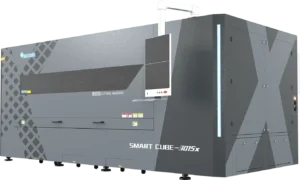
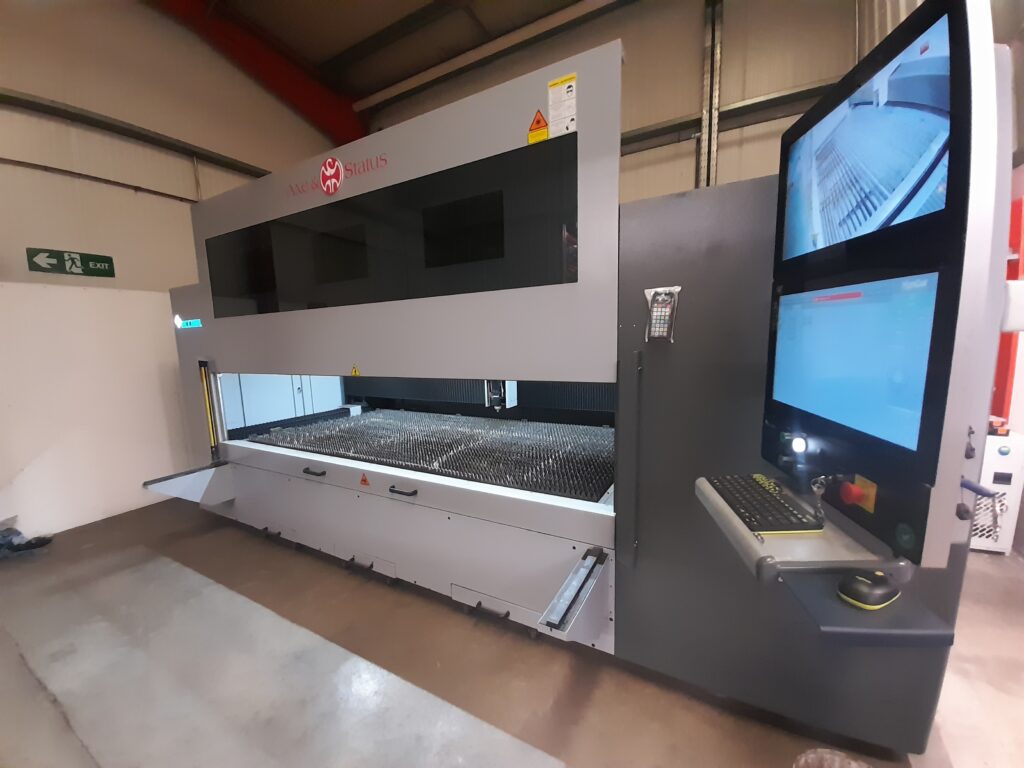
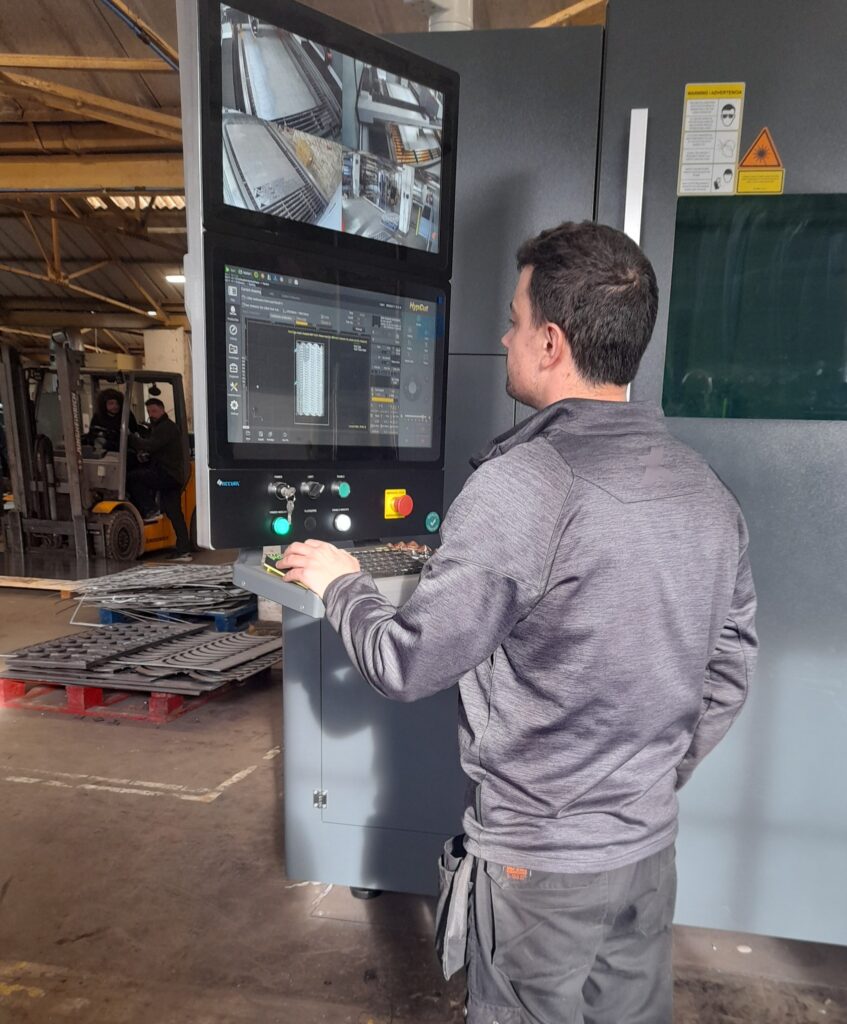
The ACCURL CNC fibre lasers supplied by Axe & Status are built around these strengths, with cutting power options and flatbed, tube and cube configurations to suit different materials and part types.
Materials That Fibre Lasers Can Cut
Fibre lasers cut a broad range of metals. How each behaves depends on its reflectivity, conductivity and the assist gas used.
Mild Steel
Mild steel is the everyday workhorse of fabrication, used for structural work, brackets, frames and machinery components. Fibre cuts it cleanly across a wide thickness range. Oxygen assist is common for thicker sections because it adds cutting energy, while nitrogen or compressed air suits thinner sheet where a clean, oxide-free edge is wanted. The result is fast, reliable cutting that suits high-volume production.
Stainless Steel
Stainless is a natural fit for fibre, particularly with nitrogen assist, which prevents oxidation and leaves a bright, clean edge ready for use. That makes it ideal for food processing, medical equipment, catering and architectural work, where appearance and hygiene matter. Fibre handles thin decorative grades and heavier structural stainless with equal confidence.
Aluminium
Aluminium is reflective and conductive, which challenged older lasers, but fibre processes it well. Nitrogen assist gives clean edges suited to automotive panels, aerospace components and signage. Because aluminium behaves differently from steel, correct parameters matter for a tidy, burr-free finish, which is where an experienced machine setup pays off.
Brass
Brass is highly reflective, so it demands a capable machine and careful settings, but modern fibre sources cut it successfully. It is widely used for electrical components, fittings and decorative parts where a neat edge and fine detail are important.
Copper
Copper is among the most reflective and thermally conductive metals, which makes it the most demanding of the common materials. Current fibre technology cuts it effectively when the machine and parameters are matched to the task. Copper features heavily in electrical and industrial applications, from busbars to connectors.
Galvanised Steel
Galvanised steel carries a protective zinc coating and is common in HVAC, ductwork and construction. Fibre cuts it well, though the coating produces additional fume, so effective extraction is important for a clean process and a good working environment.
Titanium
Titanium is prized in aerospace, medical and specialist engineering for its strength-to-weight ratio. Fibre cuts it using an inert assist gas such as nitrogen or argon to limit oxidation and maintain edge integrity. Capability depends on the specific machine, so it is worth confirming with the supplier when titanium is part of your material mix.
Other Conductive Metals
Beyond the core list, fibre lasers also process metals such as nickel alloys, tool steels, spring steel and various coated and specialist grades. Suitability varies with reflectivity, thickness and machine power, so specialist or unusual materials are always worth discussing before purchase.
What Materials Are Difficult or Unsuitable for Fibre Lasers?
Fibre lasers are optimised for metal, and their wavelength is poorly absorbed by many non-metals. Materials generally unsuitable include:
- Wood: burns and chars rather than cutting cleanly, and is far better suited to a CO₂ laser.
- Acrylic and most plastics: do not cut cleanly with fibre and give the polished edge acrylic is known for only on a CO₂ system.
- Glass: reflects and can shatter, making it unsuitable for laser cutting of this type.
- PVC: should be avoided entirely, as cutting it releases chlorine gas that is hazardous to health and corrosive to the machine.
- Certain composites: layered or resin-based composites can behave unpredictably and may release harmful fumes.
Where non-metals are a regular requirement, a CO₂ laser is usually the appropriate technology. For a workshop whose core work is metal, none of this limits day-to-day production, but it is worth being clear about before you invest.
What Factors Affect Cutting Performance?
Cut quality and capacity are the product of several variables working together.
Laser Power
Higher power increases both the thickness a machine can cut and the speed at which it cuts thinner material. Entry-level sources handle sheet work comfortably, while high-power machines open up heavy plate and faster throughput.
Material Thickness
Thicker material needs more power and slower speeds, and often a different assist gas. The relationship between thickness, power and gas is what determines a realistic cutting window for any given metal.
Assist Gas Selection
Oxygen, nitrogen and compressed air each produce different edge finishes, speeds and costs. Matching the gas to the material and the required finish is one of the most important choices in the process.
Cutting Speed
Speed has to be balanced against quality. Too fast and the cut may not complete cleanly; too slow and the edge can suffer from excess heat. The optimum depends on material, thickness and power.
Focus Position
Where the beam is focused relative to the material surface affects kerf width and edge quality. Modern machines manage focus automatically, but correct setup remains important for consistent results.
Material Quality
Consistent, good-quality stock cuts more predictably. Variations in surface condition, coating, mill scale or grade can all influence the finished edge, which is why repeatable material supply supports repeatable results.
How Thick Can a Fibre Laser Cut?
Cutting capacity varies widely with machine power, material type and assist gas, so there is no single answer. As a general guide, lower-power machines are well suited to thin and mid-gauge sheet, while high-power sources extend comfortably into thick plate. Mild steel can be cut thicker than most metals, particularly with oxygen assist, whereas reflective metals such as aluminium, brass and copper typically have a lower maximum thickness for a given machine.
Because exact capacities depend on the specific model and configuration, the reliable approach is to work from the manufacturer’s specifications for the machine in question, matched to the materials and thicknesses you actually cut. A supplier who understands your work can advise on the right power and setup rather than leaving you to interpret figures alone.
Choosing the Right Fibre Laser for Your Materials
The best machine is the one matched to your production, not simply the most powerful available. Key considerations include:
- Production volume: higher throughput justifies more power and automation.
- Material mix: the metals and thicknesses you cut most often should drive the specification.
- Sheet sizes: bed size needs to suit the parts and stock you handle.
- Automation requirements: load and unload systems and tube-cutting options can transform productivity.
- Future business growth: specifying with headroom avoids outgrowing the machine too quickly.
Weighing these together gives a specification that fits the business now and as it develops. Axe & Status works through exactly this process with fabricators, matching an ACCURL fibre laser to the materials, volumes and plans of each customer.
Common Industries Using Fibre Laser Cutting
The versatility of fibre means it appears across a broad spread of sectors, including:
- General fabrication and subcontract metalwork
- Automotive and motorsport
- Aerospace and precision engineering
- Construction and structural steel
- Agriculture and machinery manufacturing
- Architectural metalwork and signage
- Electrical enclosures and cabinets
- HVAC and ductwork manufacturing
Wherever metal parts are made in volume with consistent quality, fibre laser cutting tends to be at the heart of the process.
Common Metals Cut by Fibre Lasers
The table below summarises the main metals and their typical uses. Suitability reflects general performance rather than a specific machine.
| Material | Common Applications | General Suitability |
| Mild Steel | Structural fabrication, brackets, machinery | Excellent |
| Stainless Steel | Food processing, medical equipment, architecture | Excellent |
| Aluminium | Automotive, aerospace, signage | Excellent |
| Brass | Electrical components, decorative parts | Very Good |
| Copper | Electrical and industrial applications | Very Good |
| Galvanised Steel | HVAC, ductwork, construction | Excellent |
| Titanium | Aerospace, specialist engineering | Good (machine dependent) |
Maximum cutting thickness varies with laser power, machine configuration, material grade and assist gas. Always refer to the manufacturer’s specifications for confirmed cutting capacities.
Conclusion
Fibre lasers have become the preferred solution for modern metal fabrication because they process such a wide range of metals with speed, precision and efficiency. From everyday mild steel to reflective copper and specialist titanium, a well-specified machine handles the materials most workshops rely on, while keeping running costs and maintenance low.
The key is to match the machine to your materials and production goals rather than to headline figures. Understanding how each metal cuts, and what drives quality and capacity, puts you in a strong position to invest well and get consistent results for years to come.
About Axe & Status
Axe & Status has supplied CNC machine tools and sheet metal machinery to UK manufacturers for over fifty years. As the exclusive UK partner for ACCURL, we offer a full range of CNC fibre laser cutting machines in flatbed, tube and cube configurations, backed by applications engineering, installation, operator training and responsive aftercare. Our team helps fabricators choose the right specification for their materials and supports the machine throughout its life.
Want to know how a fibre laser would handle your materials? Talk to the Axe & Status team about your material mix and production requirements. We can assess your parts, arrange a machine demonstration and set out the installation, training and support that comes with an ACCURL fibre laser, so you choose the right solution with confidence. Get in touch to arrange a consultation or a visit to our showroom.
Frequently Asked Questions
What materials can a fibre laser cut?
Fibre lasers cut a wide range of metals, including mild steel, stainless steel, aluminium, brass, copper, galvanised steel and titanium, as well as various specialist alloys. They are not suited to most non-metals.
Can a fibre laser cut stainless steel?
Yes, and it is one of the best materials for fibre. With nitrogen assist gas it produces clean, oxide-free edges suited to food, medical and architectural work.
Can a fibre laser cut aluminium?
Yes. Although aluminium is reflective, modern fibre lasers cut it well, typically with nitrogen assist for a clean, burr-free finish.
Can fibre lasers cut copper and brass?
Yes. Both are reflective and more demanding than steel, but current fibre technology cuts them successfully when the machine and parameters are matched to the task.
What materials cannot be cut with a fibre laser?
Most non-metals, including wood, acrylic, glass and many plastics. PVC should never be cut, as it releases hazardous chlorine gas. These materials are better suited to a CO₂ laser where appropriate.
How thick can a fibre laser cut?
It depends on the machine’s power, the material and the assist gas. Lower-power machines suit thin and mid-gauge sheet, while high-power sources cut thick plate. Mild steel can be cut thicker than reflective metals. Always check the manufacturer’s specification.
What gas is used in fibre laser cutting?
Oxygen, nitrogen or compressed air, depending on the material and finish. Oxygen helps cut thicker mild steel, nitrogen gives clean edges on stainless and aluminium, and compressed air is an economical option for thinner material.
Is a fibre laser better than a CO₂ laser for metal cutting?
For metal, generally yes. Fibre offers faster speeds, lower running costs and the ability to cut reflective metals. CO₂ retains an advantage for non-metals such as acrylic and wood.
How do I choose the right fibre laser machine?
Base the choice on your material mix, typical thicknesses, production volume, sheet sizes and growth plans. Speaking to a specialist who can assess your parts and demonstrate a machine is the most reliable approach.